Repaired When Repair Is Right
We recommend a repair, not a replacement, whenever a targeted fix is the correct solution for your roof.
Read the supporting details ↗
Roof Vent, Pipe Boot & Skylight Leak Repair in Austin, TX
Roof penetrations — pipe boots (vent boots), roof vents, turbines, ridge vents, and skylights — are where a roof has to be cut open and flashed shut, and they are on Zilker Roofing's list of common roof repairs in Austin: leak tracing and sealing at valleys, vents, chimneys, or flashing, and skylight and vent boot leaks. A targeted repair may be appropriate when damage is isolated and the surrounding roof system is sound — for example, a leak at a vent or pipe boot. We inspect the roof, find the actual source of the issue, and recommend repair when repair is right.
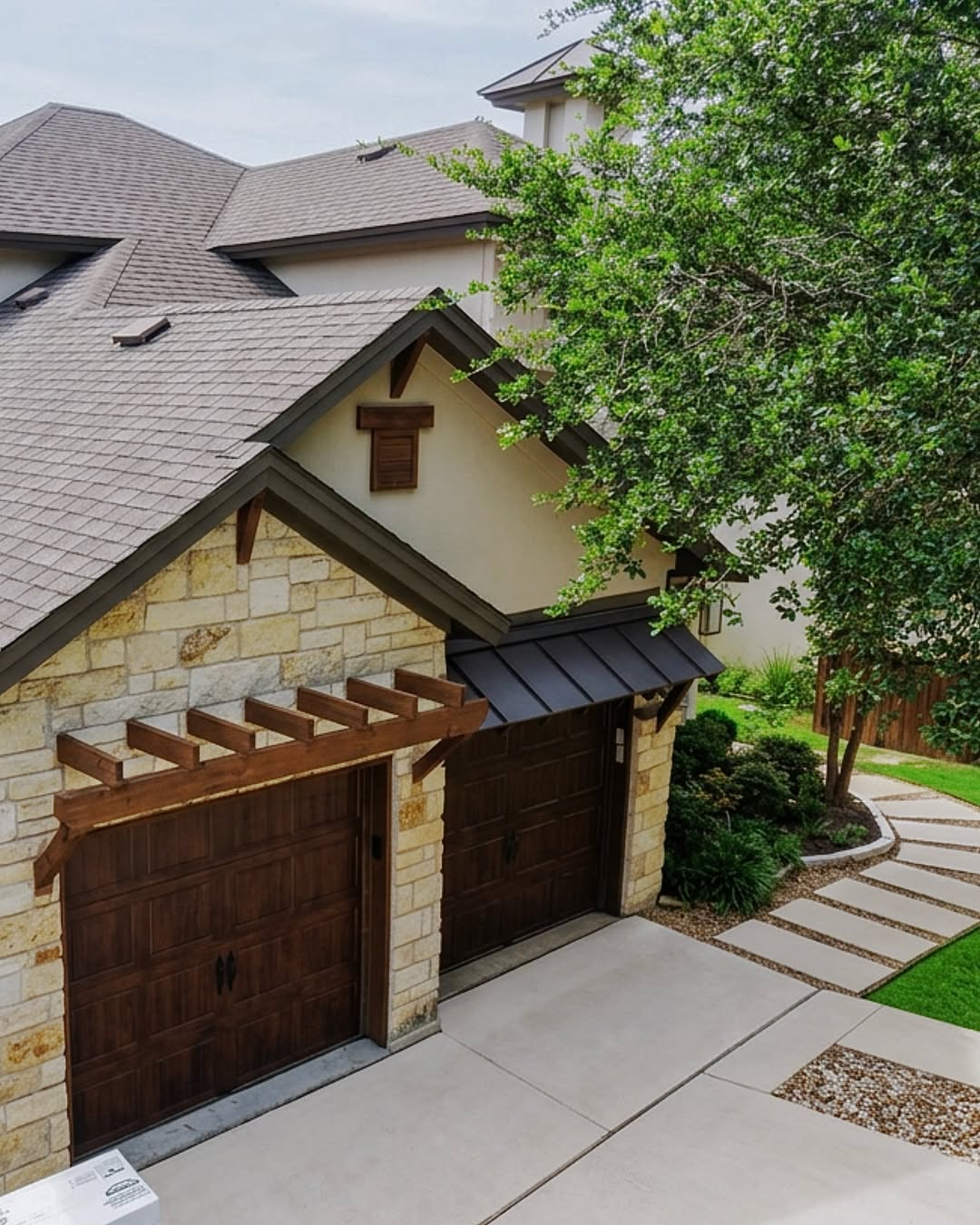
A pipe boot flashes the plumbing vents that must penetrate every roof: a metal or plastic base pan integrates with the shingles while a collar grips the pipe. On the standard neoprene-gasket boot, UV bakes the rubber until it cracks around the pipe, often before the shingles fail. Water then runs down the pipe's outside into the attic. Boots, gaskets, and sealants age on a faster clock than shingles. The stain misleads: a leaking pipe boot produces stains that mimic a shingle leak several feet downhill of the pipe — water travels along rafters before dripping. Homeowners spot the failure from the ground as a visibly split or crumbling ring at the pipe base, or inside as a stain near — but rarely directly under — a bathroom or kitchen vent line. The repair is contained: lift the surrounding shingles, swap the boot, reseal. A transition that depends on a bead of sealant to stay dry is a scheduled future leak, not a finished detail.
What a pipe boot isExhaust vents leak in different places. Box vents fail at the flashing flange - rusted, nail-sealed, or lifted metal lets wind-driven rain in. On a turbine vent, the design's weaknesses are mechanical: bearings dry out and squeal - the classic whirlybird complaint - then seize, and a seized, rusting turbine stops shedding water the way its geometry assumes. A turbine that has stopped spinning is not merely idle. A still turbine on a breezy day is an inspection finding, not a cosmetic quirk. Homeowners can check two things from the yard: whether the dome spins freely in wind, and whether rust is bleeding from the fins or base. A ridge vent fails when the slot was never actually cut (the vent is decorative), when the ridge is too short for the attic volume, or when intake at the soffits is blocked, forcing the vent to pull air — and rain — through itself. And wind-driven rain can enter vents and exhaust caps that are watertight in ordinary weather, which is why a vent that only leaks in certain storms is still a leak worth tracing.
How turbine vents workNot every wet spot under a vent is a hole in the roof. Ventilation is a balanced system, not a count of vents: an attic starved for intake pulls conditioned air from the house or rain through the exhaust vents, and mixing box vents with ridge vents or powered fans on the same attic lets one exhaust vent pull air backwards through another, bringing weather with it. Condensation from attic humidity or uninsulated ducts mimics a leak in summer. Gable vents are a separate case: they are wall components, not roof penetrations — aged louvers let horizontal storm rain reach stored belongings — and because they live in the wall, not the roof, replacing one is siding work rather than roofing work. Sorting a true penetration leak from an airflow problem is part of the diagnosis, because the fixes are different.
How roof ventilation worksA failed skylight seal or flashing is a common source of roof leaks Zilker Roofing repairs. A skylight is a roof penetration first and a window second, waterproofed by a manufacturer flashing kit that laces into the surrounding shingles. When one 'leaks,' there are three distinct failure modes to separate. Flashing failure — aged, improperly layered, or sealant-patched flashing — is the true roof leak. Unit failure — a cracked dome, a failed insulated-glass seal that fogs between panes, or perished gasket seals — is a window problem on the roof. Condensation — interior moisture hitting cold glass, common over kitchens and baths — is a ventilation problem that drips convincingly without any breach. Curb-mounted and deck-mounted units flash differently, so replacements are not interchangeable across mounting types even at the same size. Most leaking skylights do not need replacing: we reflash the skylight so it stops leaking. If a skylight is cracked and has to be replaced, we can replace it when that is agreed in the scope before work starts.
Skylights and skylight leaksWe walk the roof when conditions allow and inspect the surface, penetrations, flashing, valleys, vents, and other key components, and leak tracing starts in the attic during or just after rain, following the water trail up the framing to the highest wet point. We photograph relevant findings and explain them in plain language. Every Zilker roof repair follows a clear process: inspection and diagnosis; a written proposal with photo documentation; the agreed repairs; a final review of the work. Repairs carry a 2-year workmanship warranty. We document the applicable terms in writing. Zilker Roofing does not recommend a full roof replacement when a targeted repair is the right solution.
How we trace a roof leakCentral Texas weather works on roof penetrations three ways. Sun: on a pipe boot, UV bakes the rubber until it cracks around the pipe; on a skylight, acrylic domes yellow under Texas UV. Hail: hailstones can dent soft metals like vents and flashing, dented turbine fins after a hailstorm serve adjusters as collateral evidence of impact, and hail commonly cracks acrylic domes. Wind: a turbine's tall profile gives wind something to grab, and poorly braced turbines rack or blow off in the same storms that crease shingles. After a storm, check the penetrations along with the shingles — this type of storm damage often isn't visible from the ground, and may not leak right away.
Coverage depends on your policy and the insurer’s assessment. We document the roof’s condition and provide a written roofing estimate. We do not negotiate claim settlements or make coverage decisions. Zilker Roofing is not a licensed public adjuster. We do not file insurance claims on your behalf, negotiate with your insurance carrier, or speak to your insurer without your involvement. We provide documentation and support only. Zilker Roofing does not use Assignment of Benefits contracts. The homeowner remains the policyholder in control of their claim at all times. We never ask customers to sign over their insurance rights to us.
What you can expect
We recommend a repair, not a replacement, whenever a targeted fix is the correct solution for your roof.
Read the supporting details ↗Every estimate includes a detailed written scope with materials, labor, and timeline. No hidden fees. No surprises after the job starts.
Read the supporting details ↗Roof repair
Tell us what you’re seeing. We can talk through your roof concern and the next step.
For a leak, damaged shingles, or another roof concern, start with a conversation.
Call (512) 893-7663 ↗Before you decide
The usual suspect is the pipe boot — the flashing collar sealing plumbing vent pipes through the roof. On a neoprene-gasket boot, UV bakes the rubber until it cracks around the pipe, often before the shingles fail. Water then runs down the pipe's outside into the attic. The stain can mislead: a leaking pipe boot produces stains that mimic a shingle leak several feet downhill of the pipe, because water travels along rafters before dripping. The fix is contained — lift the surrounding shingles, swap the boot, reseal.
It can be. A turbine that has stopped spinning is not merely idle — seized bearings usually mean rust, and a rusted turbine throat is a water entry waiting for the right wind. A still turbine on a breezy day is an inspection finding, not a cosmetic quirk. From the yard you can check whether the dome spins freely in wind, and whether rust is bleeding from the fins or base.
Yes. A ridge vent fails when the slot was never actually cut (the vent is decorative), when the ridge is too short for the attic volume, or when intake at the soffits is blocked, forcing the vent to pull air — and rain — through itself. Homeowners can check from the attic: daylight along the ridge line means the slot exists. A ridge vent is exhaust only — it works only when matched with intake at the soffits.
Usually there are three possibilities to separate. Flashing failure — aged, improperly layered, or sealant-patched flashing — is the true roof leak. Unit failure — a cracked dome, a failed insulated-glass seal that fogs between panes, or perished gasket seals — is a window problem on the roof. Condensation — interior moisture hitting cold glass, common over kitchens and baths — is a ventilation problem that drips convincingly without any breach. Not every wet skylight is a leak, and the three have different fixes.
Not by itself. A targeted repair may be appropriate when damage is isolated and the surrounding roof system is sound — for example, a leak at a vent or pipe boot. An inspection establishes the scope; age alone does not decide whether a roof needs replacement. Zilker Roofing does not recommend a full roof replacement when a targeted repair is the right solution. The repair-vs-replace decision is driven by the condition of the roof, not by what is most profitable.
Not automatically. Most skylights are still fine, and the flashing around them is redone with the new roof. We check the skylight during the inspection; if it is cracked or failing, we tell you, and it is replaced only when that is agreed in the scope before work starts. Curb-mounted and deck-mounted units flash differently, so replacements are not interchangeable across mounting types even at the same size.
Usually not. Gable vents are wall components, not roof penetrations — they belong to the siding trade and survive a re-roof untouched, and replacing one is siding work rather than roofing work. Aged louvers and torn screens let horizontal storm rain through a gable vent — a water entry that stains the attic floor at the end wall and is routinely misread as a roof leak. They are checked from inside the attic in any thorough inspection.
Coverage depends on your policy and the insurer’s assessment. We document the roof’s condition and provide a written roofing estimate. We do not negotiate claim settlements or make coverage decisions. Zilker Roofing is not a licensed public adjuster. We do not file insurance claims on your behalf, negotiate with your insurance carrier, or speak to your insurer without your involvement. We provide documentation and support only.