Repaired When Repair Is Right
We recommend a repair, not a replacement, whenever a targeted fix is the correct solution for your roof.
Read the supporting details ↗
Wind Damage Roof Repair in Austin, TX
Wind damage is distinct from ordinary wear, and the two can be difficult to distinguish from the ground: a creased shingle may have a broken seal even when it lies flat again, while curling and uniform granule loss across a slope can be signs of aging. For a wind-damage inspection, we can use photographs to document visible conditions and note the areas assessed and any limits. We inspect before recommending work and discuss repair when the observed conditions support a targeted fix.
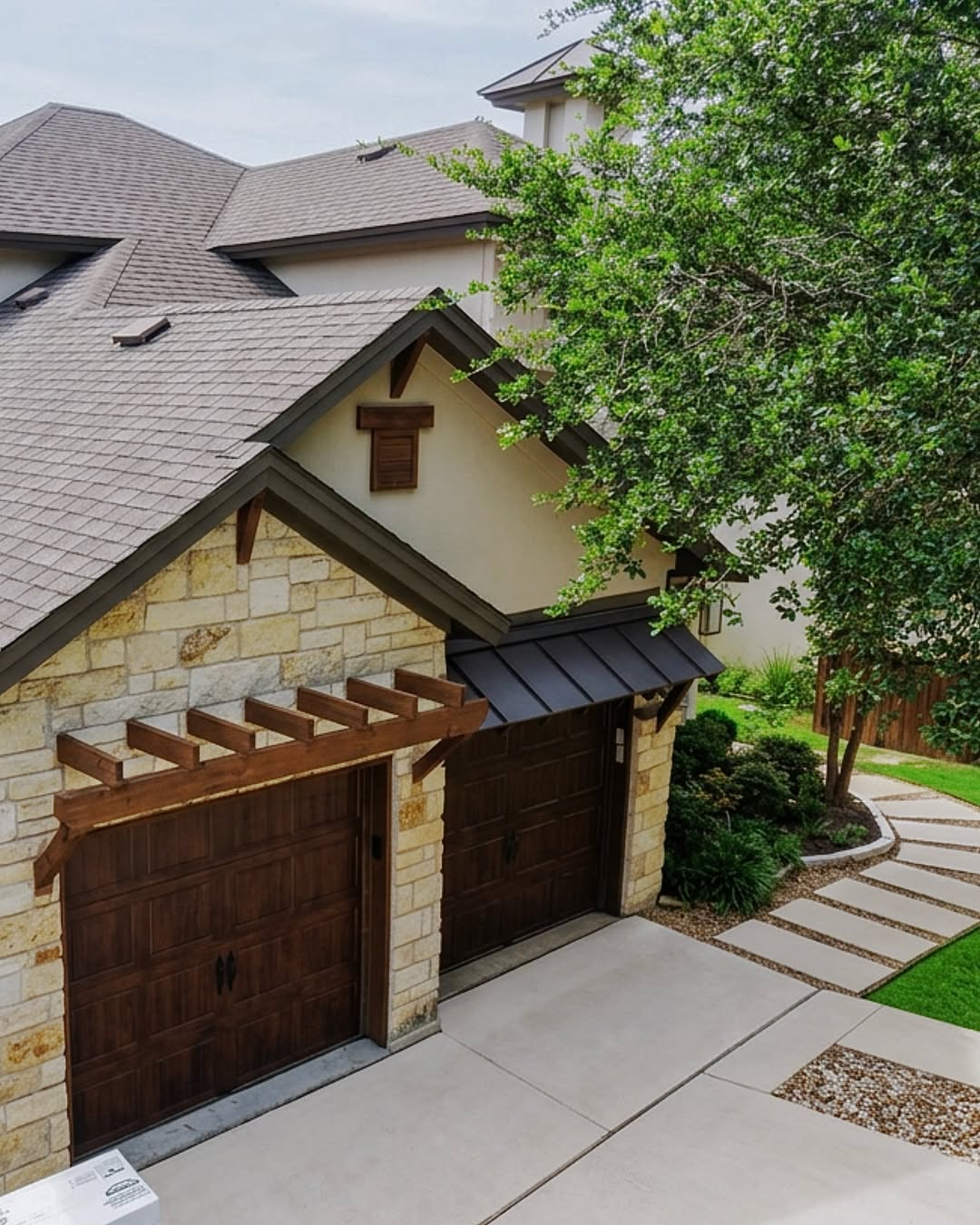
Wind can crease or lift shingles along edges, ridges, and rakes, and a creased shingle may have a broken seal even when it lies flat again. Wind damages roofs mostly by suction. Wind accelerating over the roof lowers pressure above it, which is why damage tends to concentrate at edges, corners, and ridges. When gusts break a tab's seal-strip bond, the tab flutters, folding repeatedly along the line just above its fasteners; the flexing fractures the mat along that hinge, leaving a crease visible as a horizontal line of cracked granule surface even after the wind dies and the tab settles back into place. Because everything lies flat afterward, ground-level inspection can miss it — 'no missing shingles' after a windstorm does not mean no wind damage. Wind damage can also present as torn ridge caps, displaced or bent flashing, and impact marks from wind-driven debris, and it may be visible at close range or from the attic before it is obvious from the ground.
If wind has opened the roof, the repair sequence starts with dry-in: exposed underlayment or bare decking can let water in on the next rain. Temporary tarping may protect the home while permanent repairs are arranged. Scheduling and temporary stabilization depend on weather, safe access, materials, and crew availability. Tarping is a temporary measure and is not a repair. The permanent work can include replacing blown-off and creased shingles, re-sealing lifted tabs whose adhesive bond broke, and addressing wind-peeled ridge caps and flashing. Inspections are performed on-roof by a trained technician wherever conditions allow, and we do not always find damage worth acting on — and when we don't, we tell you that.
Schedule a Wind Damage InspectionThe NOAA Storm Record counts 140 damaging-wind reports for Travis County since 2010, verifiable at the Austin Metro Severe Weather Record at /knowledge/records/austin-storm-record/, where the underlying NOAA source files and their SHA-256 hashes are published for independent verification. Those reports describe weather observations, not damage to a particular property. In Central Texas, wind damage tends to concentrate on the windward slope and along ridges, hips, and rakes, where uplift pressure is highest — which is where an inspection looks first.
Whether a particular loss is covered is the carrier's determination, not the contractor's. Homeowners should contact their insurer directly for details on policy terms and coverage. Contact your insurer promptly about possible damage and applicable deadlines; an inspection appointment should not delay that call. We document storm and hail damage with photos, measurements, and a detailed estimate you own. Zilker Roofing is not a licensed public adjuster. We do not file insurance claims on your behalf, negotiate with your insurance carrier, or speak to your insurer without your involvement. We provide documentation and support only. Zilker Roofing does not use Assignment of Benefits contracts. The homeowner remains the policyholder in control of their claim at all times.
What you can expect
We recommend a repair, not a replacement, whenever a targeted fix is the correct solution for your roof.
Read the supporting details ↗Every estimate includes a detailed written scope with materials, labor, and timeline. No hidden fees. No surprises after the job starts.
Read the supporting details ↗A little clarity before the big decision
See a starting roof replacement price range for your home. Then talk it through with the people who’ll look at your roof.
A preliminary retail range. Your final quote follows an on-site measurement and a review of the work.
How the estimate works ↗Before you decide
Yes. Wind does not need to remove a shingle to ruin it. When gusts break a tab's seal-strip bond, the tab flutters and fractures the mat along the hinge line just above its fasteners, leaving a crease — and a creased shingle usually looks intact from the ground because the tab lies back down. The fracture shows as a faint horizontal line or only when the tab is lifted by hand, so 'no missing shingles' after a windstorm does not mean no wind damage. Diagnosis means gently lifting tabs on the windward slopes and looking for the hinge line and broken seals — which is on-roof work with photos, not a driveway assessment.
Because uplift is suction, not push — wind accelerating over the roof lowers pressure above it, like an airplane wing, and the pressure differential spikes at eaves, rakes, ridges, and especially corners. That is why blow-offs tend to start at edges, and why perimeter details — starter strip adhesive, drip edge, cap-shingle nailing — matter to a roof's wind performance. Failure can propagate: the first lifted shingle exposes the unsealed edge of its neighbor, and a slope can unzip progressively from one broken bond.
Whether wind damage is covered is your insurer's decision under your policy. Homeowners should contact their insurer directly about their policy. Contact your insurer promptly about possible damage and applicable deadlines; an inspection appointment should not delay that call. We provide the on-roof inspection, photographs, and documentation you can use. Zilker Roofing is not a licensed public adjuster. We do not file insurance claims on your behalf, negotiate with your insurance carrier, or speak to your insurer without your involvement. We provide documentation and support only.
A roof inspection assesses visible roof conditions, where safe access allows, before the scope of work is set. Localized repair may be appropriate when the surrounding system is sound. Replacement is warranted when damage is widespread, the roof is near the end of its useful life, or the system can no longer be repaired reliably. A few visible damaged shingles do not establish that a small repair is sufficient.
Protect the interior first. Exposed underlayment or bare decking can let water in on the next rain, so the repair sequence starts with dry-in. Temporary tarping may protect your home after storm damage while permanent repairs are arranged. Scheduling and temporary stabilization depend on weather, safe access, materials, and crew availability. Tarping is a temporary measure and is not a repair, so permanent work should follow: replacing blown-off and creased shingles, re-sealing lifted tabs whose adhesive bond broke, and addressing wind-peeled ridge caps and flashing. Record the storm date, take photos safely, and keep receipts for temporary repairs. Contact your insurer promptly about possible damage and applicable deadlines; an inspection appointment should not delay that call.