Inspection First, Always
We inspect before we recommend. We never suggest a replacement when a repair is the right call.
Read the supporting details ↗
Residential roof replacement
A replacement is a big decision. We’ll walk through the roof’s condition, the materials and scope, and the questions that matter for your home before work begins.
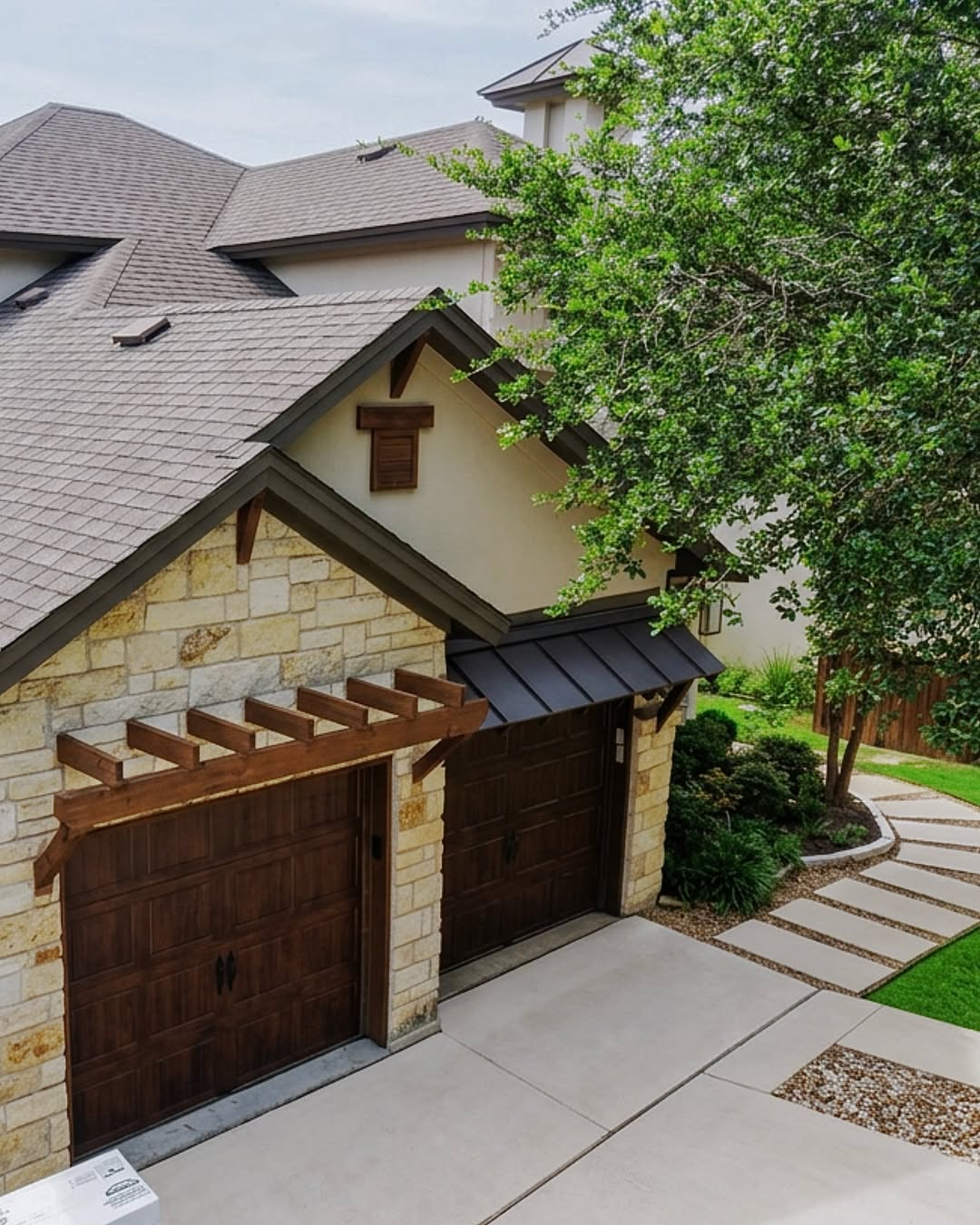
A Zilker Roofing replacement is a full roofing-system installation, beginning with tear-off of the existing roof. We inspect the decking, address damaged decking where needed, install code-compliant underlayment, flashing, ventilation, and shingles using Owens Corning materials as a Preferred Contractor. The work is backed by a 5-year workmanship warranty with Owens Corning and Malarkey material warranties carrying limited-lifetime coverage against manufacturing defects (and multi-decade non-prorated terms on a complete system). The goal is a roof built correctly from the deck up.
The process starts with an inspection to confirm that replacement is warranted and to identify visible scope considerations. We then provide a detailed estimate covering materials, labor, and timeline. Most residential roof replacements in Austin are completed in one to two days depending on size, complexity, weather, and decking condition. After tear-off, we inspect the deck, install the new system, clean up the property, and review the finished work.
See typical Austin replacement costs and factorsIf a roof inspection shows storm damage severe enough that replacement may be warranted, homeowners insurance may be involved depending on the policy, deductible, carrier review, and documented roof condition. Zilker Roofing inspects and documents the damage and can explain, educationally, what a Summary of Damages or scope of loss means — so you understand your own claim paperwork — and we provide our own detailed, independent roofing estimate. The claim remains yours: you and your insurer file, review, and settle it, and you decide whether to file at all. Zilker Roofing does not use Assignment of Benefits contracts and is not a licensed public adjuster, so we do not file claims on your behalf or negotiate with your insurance carrier.
No — Zilker Roofing does not install new shingles over an existing roof system. A full tear-off allows us to inspect the decking, correct hidden issues, and install the new roof system properly.
Take a closer look
What you can expect
We inspect before we recommend. We never suggest a replacement when a repair is the right call.
Read the supporting details ↗Price your actual roof online at zilkerroofing.com/roof-quote/ — a free, no-obligation quote in minutes.
Read the supporting details ↗We do not recommend work that is not needed. Our estimates reflect actual scope — no inflated projections, no high-pressure sales tactics.
Read the supporting details ↗Zilker Roofing serves the greater Austin, Texas metropolitan area, including Austin, Bee Cave, Cedar Park, Georgetown, Kyle, Lakeway, Round Rock, and San Marcos.
Read the supporting details ↗We recommend a repair, not a replacement, whenever a targeted fix is the correct solution for your roof.
Read the supporting details ↗Every replacement estimate is a detailed line-item written scope — no inflated projections, no pressure, and we never recommend more work than you actually need.
Read the supporting details ↗A little clarity before the big decision
See a starting roof replacement price range for your home. Then talk it through with the people who’ll look at your roof.
A preliminary retail range. Your final quote follows an on-site measurement and a review of the work.
How the estimate works ↗Before you decide
Most residential roof replacements take 1–2 days from tear-off to final cleanup. Larger or more complex roofs may take longer, but we'll give you a clear timeline before we start.
No. The work is noisy but safe and well-organized. You're welcome to stay home. We use magnetic sweepers after every shift to catch nails and leave your property clean.
No. We always perform a complete tear-off down to the decking. This lets us inspect and repair the deck, install proper underlayment, and ensure your manufacturer warranty is valid.
We use premium materials from Owens Corning and Malarkey — proven to hold up in Central Texas heat, hail, and storm conditions. Replacements carry our 5-year workmanship warranty and repairs a 2-year workmanship warranty, on top of the manufacturer's material warranty: Owens Corning and Malarkey shingles are covered limited-lifetime against manufacturing defects, with multi-decade non-prorated coverage when a complete manufacturer system is installed.
Central Texas UV, heat, thermal cycling, and hail shorten roofing life compared with manufacturer marketing ranges. Asphalt shingles have a broad 10–20-year range; product and installation affect where a roof falls within it. Standing-seam metal commonly lasts 40–70 years. Tile and slate can last 50+ years as materials, though the underlayment beneath tile needs replacement sooner. TPO membranes commonly last 20–30 years. Ventilation, installation quality, and maintenance affect the life a particular roof delivers. These are material ranges, not a diagnosis of an individual roof.
Yes. Zilker Roofing installs standing seam and R-panel metal roofing systems for residential and light commercial properties across Austin and Central Texas. Metal is a long-term investment — 40–70 year lifespans are common — and holds up well against Texas hail, heat, and UV exposure.
Most full roof replacements on Austin-area homes run $8,000–$15,000 depending on size, pitch, complexity, and material grade; larger, steeper, or premium-material projects — designer shingles, Class 4 impact-rated lines, standing seam metal — commonly run $15,000–$30,000. Those are typical project bands, not quotes. We provide honest, line-item estimates — no inflated projections, no pressure, and we never recommend more work than you actually need. Schedule a free inspection to get a real number.
Usually because they are pricing different scopes, not the same job at different margins. One bid may include a decking allowance, code-required ventilation and flashing, full tear-off, and disposal; another may quietly omit them and add them back later as change orders. A per-square price with no line items behind it is an advertisement, not an estimate. Ask every bidder for a written line-item scope, then compare the scopes before you compare the totals.
Xactimate is the estimating platform most insurance carriers use to build their scope of work and pricing for a covered loss. An Xactimate scope reflects what the carrier has agreed the damage requires, priced from the platform's regional data. A contractor's quote is that contractor's own price for a stated scope of work. On an insurance-paid replacement the two documents describe the same roof and should be reconciled line by line — a difference between them is usually a difference in scope, and it is worth understanding which items each one includes before work begins.
Decking, almost always. Rot and delamination hide under the shingles and cannot be fully known until tear-off, which is why an honest estimate carries decking as a per-sheet allowance instead of a fixed total — an estimate that promises zero decking cost is promising knowledge nobody has yet. When we open a roof and find deck damage, we document it with photos, price the replacement sheets against the allowance already in your estimate, and get your approval before proceeding. Code-required items discovered during work follow the same rule: documented, priced, and approved in writing.
On a covered claim, most policies describe the homeowner's share as the deductible — commonly a percentage of dwelling coverage rather than a flat fee — plus any upgrades beyond the covered scope. Texas Insurance Code Chapter 707 addresses contractors offering to waive or absorb deductibles, so an offer to make yours disappear is a red flag, not a discount. Many replacement-cost policies also describe withholding recoverable depreciation until completed work is documented; the policy language, not the name on the check, answers whether and when it comes back. We put the full scope in writing so you can see exactly how the covered work and your share line up.
Material moves cost by class, not by increments. Architectural asphalt shingle is the baseline class for most Central Texas homes. Standing seam metal sits in a higher cost class — more material cost and more specialized labor — traded against a much longer service life. Tile and flat membrane systems each occupy their own class, with their own structural and installation requirements. Within any class, grade, warranty tier, and system components shift the number further. The right comparison is lifetime cost against how long you plan to own the home, and a line-item estimate lets you see exactly what each class buys.
Most full replacements in the Austin area land between $8,000 and $15,000. Larger, steeper, or more complex roofs, and premium materials — designer shingles, Class 4 impact-rated lines, standing seam metal — commonly run $15,000 to $30,000. These are typical project bands, never quotes: every roof is measured, and the real number comes from a written line-item estimate for your specific roof.
Because bids that differ by thousands are usually pricing different scopes, not the same job at different margins. A bid far below the others has typically omitted something — the decking allowance, code-required ventilation or flashing, full tear-off, or disposal — and the omitted items tend to return mid-job as change orders. Before comparing totals, ask every bidder for a written line-item scope and compare the scopes. A low number attached to a smaller scope is not a lower price for your roof.
They are typical project bands for the Austin area, not quotes. Where your roof lands depends on measurable drivers — size in squares, pitch and complexity, how many layers come off, decking condition found at tear-off, the material line you choose, ventilation scope, and disposal. Every roof is measured before a number goes in writing, and the estimate itemizes each driver so you can see exactly what sets your figure.