Repaired When Repair Is Right
We recommend a repair, not a replacement, whenever a targeted fix is the correct solution for your roof.
Read the supporting details ↗
Roof Flashing Repair in Austin, TX
Flashing is the metal transition pieces that waterproof every place a roof plane meets a wall, chimney, or penetration. Zilker Roofing handles flashing failures as targeted repair: we inspect the roof, find the actual source of the issue, and recommend repair when repair is right — no unnecessary replacements. Properly lapped metal flashing sheds water mechanically for the life of the roof.
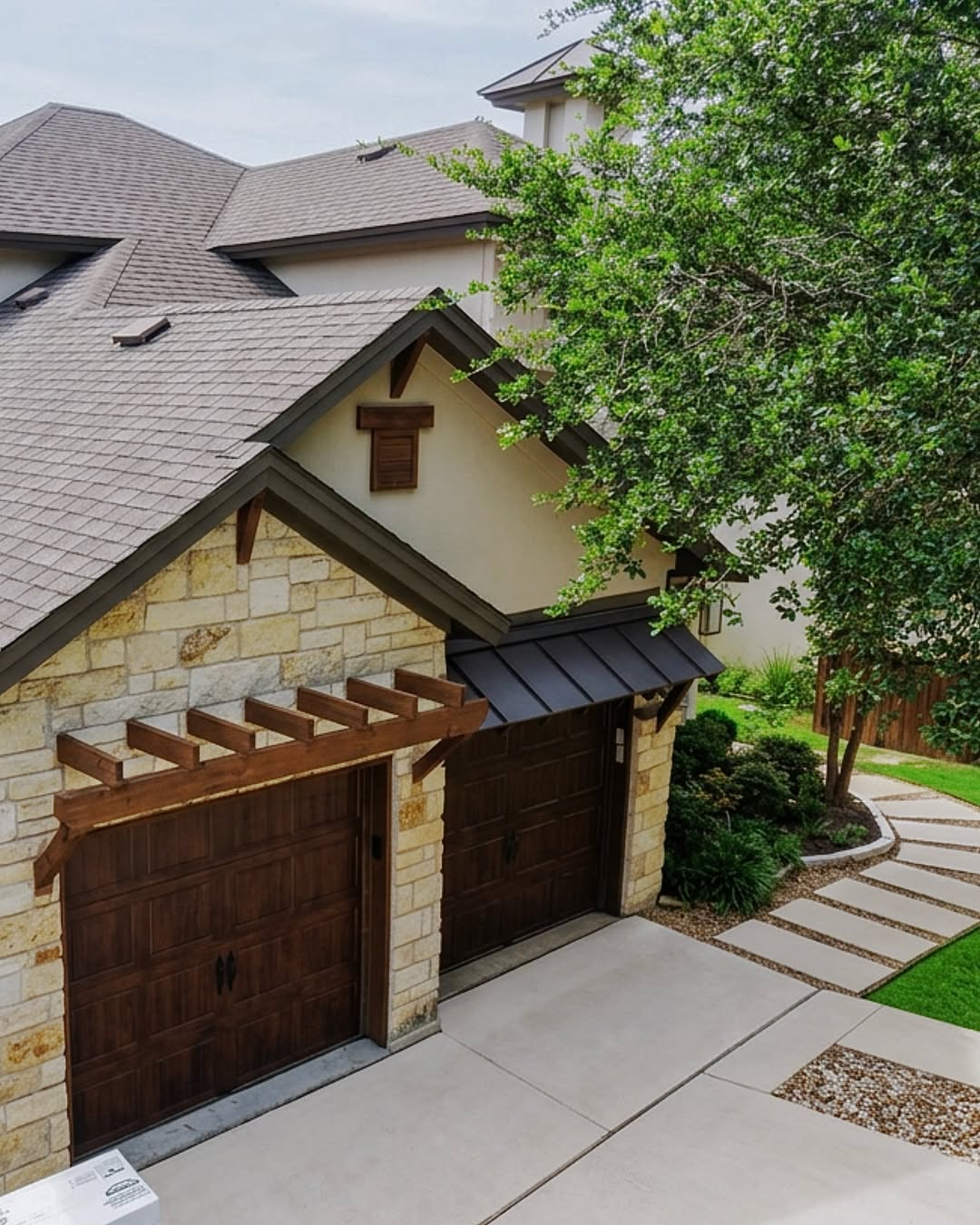
Our common roof repairs include damaged flashing around chimneys or walls; chimney cricket failures and drainage issues; skylight and vent boot leaks; and leak tracing and sealing at valleys, vents, chimneys, or flashing. We repair failed flashing and cracked pipe boots, and we diagnose water coming through the roof so the repair addresses the source rather than just the symptom. Every roof repair starts with an inspection before an estimate, allowing us to define a clear repair scope based on the roof's actual condition.
See Common Roof RepairsChimney flashing is the assembly of metal pieces that seals the joint between a chimney and the roof: step flashing up the sides, apron flashing below, a cricket or saddle above, and counter flashing let into the masonry over all of it. At a chimney, four kinds of flashing have to work together. Common failures are counter flashing that is surface-mounted and caulked instead of let into the masonry, step flashing skipped in favor of a single L-shaped piece, and a missing cricket. Homeowners see stains at the ceiling directly below a chimney's downhill face, or leaks that appear only in wind-driven rain. Caulk is not flashing; a chimney that leaks after 'sealing' usually needs the flashing rebuilt.
How Chimney Flashing WorksCounter-flashing (or cap flashing) is the visible upper metal on a chimney or masonry wall. Base and step flashing turn water off the roof, but their top edges would let water in behind them; counter-flashing solves this by embedding into a reglet — a groove cut into a mortar joint — or lapping down from behind cladding, hanging over the lower flashing like a metal awning. It is the second layer of a two-part system, not an alternative to it. It fails when the reglet sealant dries and cracks, mortar deteriorates, or an installer surface-mounts the metal with a caulk bead instead of cutting a reglet. Homeowners spot loose, rattling, or fallen strips of metal at the chimney. Repair means grinding a clean reglet, bending new metal into it, wedging it, and sealing with polyurethane — masonry work as much as roofing work.
What Is Counter-Flashing?A chimney cricket is a small peaked diverter built behind a chimney's uphill side that splits descending water around it instead of letting it dam. On its uphill side, water and debris decelerate and pile against the vertical masonry — a dam that holds wet leaves against flashing year-round and, in storms, pools water above the flashing's height. Code (IRC) requires a cricket when the chimney is wider than 30 inches across the slope; narrower chimneys use a back pan flashing instead. A wide chimney with no cricket leaks behind itself by design, and no amount of re-caulking fixes the geometry. Retrofit during re-roofing is straightforward; standalone retrofit means opening that roof section. Which product, gauge or detail a specific roof needs is a job-by-job determination made after an inspection, and the building code and the manufacturer's installation instructions govern over any general description.
What Is a Chimney Cricket?Step flashing waterproofs the sloped joint where a roof plane dies into a vertical surface — the side of a chimney, dormer, or second-story wall. Each piece is a small L-shaped metal rectangle: one leg lies on top of a shingle, the next shingle course covers it, and the next flashing piece laps over that, stepping up the slope so every drop of water lands on metal and is shed onto the shingle below. It fails when installers substitute one long continuous strip, when pieces are face-nailed through the exposed leg, or when a re-roof reuses bent, rust-thinned pieces. Homeowners see leaks as stains on interior walls below the roofline, or exterior streaking at the roof-wall joint. Kick-out flashing is the last piece of step flashing at the bottom of a roof-to-wall joint, bent outward at an angle so the concentrated stream of water running down that joint is 'kicked' away from the wall and into the gutter; its absence causes wall rot that gets misdiagnosed as a siding or window leak. Correct repair requires lifting siding or shingle courses and re-weaving new pieces course by course — it cannot be fixed from the surface with sealant.
How Step Flashing WorksFlashing is not caulk: sealant is a maintenance material with a service life measured in years, while properly lapped metal flashing sheds water mechanically for the life of the roof. Sealant on a roof has narrow, legitimate jobs: sealing exposed nail heads on the last course of ridge cap and on flashing, bedding the top edge of counter flashing, sealing the collar of a pipe boot, and closing the laps on metal panels with a butyl or polyurethane product. Asphalt roof cement (plastic cement) is a thick trowel-grade patching compound for emergency and temporary repairs on asphalt roofs; it cracks and shrinks in Texas heat within a few seasons and should not be the permanent fix. The rule that matters: when a leak is 'fixed' with a bead of caulk over a flashing problem, the leak returns, because sealant weathers and flashing is designed not to depend on it.
How Roof Flashing WorksEvery Zilker roof repair follows a clear process: inspection and diagnosis; a written proposal with photo documentation; the agreed repairs; a final review of the work. A flashing leak is traced before it is repaired, because the stain is the exit, not the entrance: systematic diagnosis works uphill from the evidence to the highest wet point, and flashings at walls and chimneys are among the places inspected upslope of it. After the repair is complete, we review the work so you know what was fixed and why. Repairs carry a 2-year workmanship warranty. We document the applicable terms in writing.
How We Trace a Roof LeakA roof inspection assesses visible roof conditions, where safe access allows, before the scope of work is set. Localized repair may be appropriate when the surrounding system is sound. Replacement is warranted when damage is widespread, the roof is near the end of its useful life, or the system can no longer be repaired reliably. A few visible damaged shingles do not establish that a small repair is sufficient. Zilker Roofing does not recommend a full roof replacement when a targeted repair is the right solution. The repair-vs-replace decision is driven by the condition of the roof, not by what is most profitable.
Roof Repair ServicesCoverage depends on your policy and the insurer’s assessment. We can document observed roof conditions and provide an estimate; your insurer decides coverage. Contact your insurer promptly about possible damage and applicable deadlines; an inspection appointment should not delay that call. Zilker Roofing is not a licensed public adjuster. We do not file insurance claims on your behalf, negotiate with your insurance carrier, or speak to your insurer without your involvement. We provide documentation and support only. Zilker Roofing does not use Assignment of Benefits contracts. The homeowner remains the policyholder in control of their claim at all times. We never ask customers to sign over their insurance rights to us.
What you can expect
We recommend a repair, not a replacement, whenever a targeted fix is the correct solution for your roof.
Read the supporting details ↗Every estimate includes a detailed written scope with materials, labor, and timeline. No hidden fees. No surprises after the job starts.
Read the supporting details ↗Roof repair
Tell us what you’re seeing. We can talk through your roof concern and the next step.
For a leak, damaged shingles, or another roof concern, start with a conversation.
Call (512) 893-7663 ↗Before you decide
Counter-flashing is the upper flashing layer, let into masonry or lapped from a wall, that covers the top edge of step or base flashing. It is the second layer of a two-part system, not an alternative to it. The two layers stay unfastened to each other so the chimney and roof frame can move independently without tearing the seal. Caulking the top of step flashing directly to brick is a substitute that fails.
Caulk is not flashing; a chimney that leaks after 'sealing' usually needs the flashing rebuilt. Sealant supplements flashing; it never replaces it. When a leak is 'fixed' with a bead of caulk over a flashing problem, the leak returns, because sealant weathers and flashing is designed not to depend on it.
A chimney cricket is a small peaked diverter built behind a chimney's uphill side that splits descending water around it instead of letting it dam. Code (IRC) requires a cricket when the chimney is wider than 30 inches across the slope; narrower chimneys use a back pan flashing instead. Homeowners can check from the ground or attic: a wide chimney with roofing dead-ending flat against its back is the finding. Which product, gauge or detail a specific roof needs is a job-by-job determination made after an inspection.
Homeowners see leaks as stains on interior walls below the roofline, or exterior streaking at the roof-wall joint. Where kick-out flashing is missing, the damage is hidden: paint bubbling low on the wall, a soft or stained band of siding below the roof termination, or rot discovered only during siding replacement. Correct repair requires lifting siding or shingle courses and re-weaving new pieces course by course — it cannot be fixed from the surface with sealant.
A roof inspection assesses visible roof conditions, where safe access allows, before the scope of work is set. Localized repair may be appropriate when the surrounding system is sound. Replacement is warranted when damage is widespread, the roof is near the end of its useful life, or the system can no longer be repaired reliably. A few visible damaged shingles do not establish that a small repair is sufficient.
Repairs carry a 2-year workmanship warranty. We document the applicable terms in writing.
Coverage depends on your policy and the insurer’s assessment. We can document observed roof conditions and provide an estimate; your insurer decides coverage. Contact your insurer promptly about possible damage and applicable deadlines; an inspection appointment should not delay that call. Zilker Roofing is not a licensed public adjuster. We do not file insurance claims on your behalf, negotiate with your insurance carrier, or speak to your insurer without your involvement. We provide documentation and support only.