Repaired When Repair Is Right
We recommend a repair, not a replacement, whenever a targeted fix is the correct solution for your roof.
Read the supporting details ↗
Soffit, Fascia, Drip Edge & Gutters in Austin, TX
Soffit and fascia board rot or breakage and water-damaged decking are common roof repairs in Austin, and they share one cause: soffit and fascia are the first wood to fail when water handling at the roof edge goes wrong. Zilker Roofing does this work with a roof repair or replacement, and it is not automatic: when the inspection shows soffit or fascia rotted by water damage that has to be replaced, we show you what we found, and the scope and price are agreed before work starts. We never leave a customer's home half done. We recommend repair when repair is right — no unnecessary replacements.
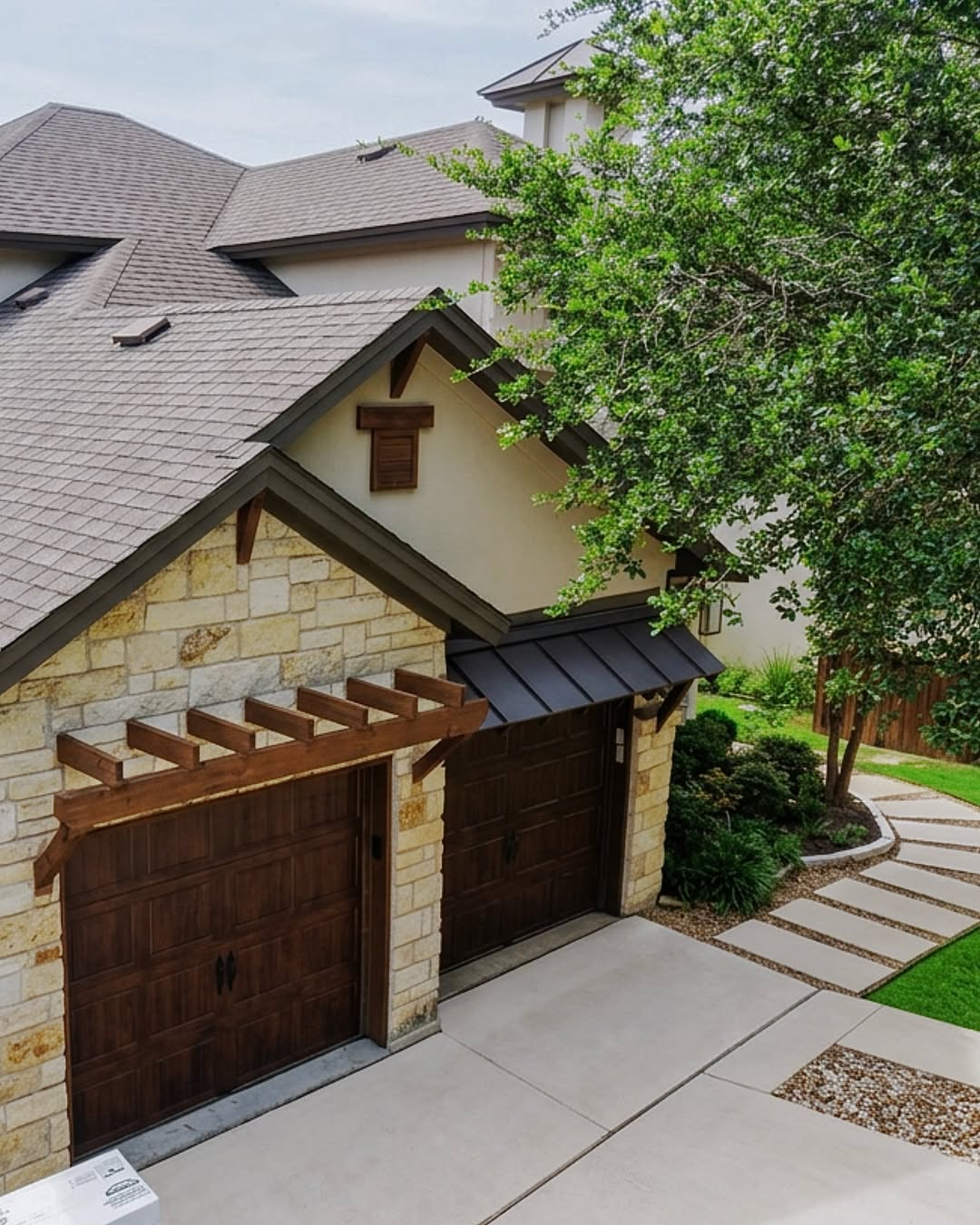
Common roof repairs in Austin include soffit and fascia board rot or breakage and water-damaged decking. Every roof repair starts with an inspection before an estimate, allowing us to define a clear repair scope based on the roof's actual condition. At the eave, that scope can reach the fascia — the vertical board at the roof edge that closes the rafter tails and carries the gutter; the soffit — the horizontal panel underneath the overhang; the drip edge installed along eaves and rakes; and the outer inches of decking. Zilker Roofing installs or replaces gutters as part of a roofing project and does not take on gutter work separately from a roof.
See Common Roof RepairsSoffit and fascia damage is usually a symptom, not the disease: the rot points back to failed gutters, missing drip edge, or roof-edge leaks that must be fixed first or the new wood rots the same way. Water reaches the fascia three ways: over the back of a clogged or badly pitched gutter, around a shingle edge that lacks drip edge metal, or wicking up end grain at corners and joints. Once softened, it loses grip on gutter spikes, the gutter sags, overflow worsens, and the rot accelerates — a feedback loop homeowners see as a pulling-away gutter, peeling paint, or a visibly wavy edge line. A stain on the soffit means water is already inside the edge assembly: by the time it shows underneath, the wood above has been wet for a while.
Soffit and Fascia, ExplainedDrip edge is L-profile metal flashing installed along eaves and rakes that directs runoff off the roof edge and into gutters instead of wicking behind them into fascia boards and the outer inches of decking - the zone where hidden edge rot starts. Drip edge is code-required perimeter flashing, not optional trim — and its presence is not the same as its correctness: metal that terminates behind the gutter line wets the fascia on every rain while looking properly installed from the street. Drip edge must lap into the gutter, not behind it. Where a gutter hangs low or the drip edge leg is short, water can run down the fascia behind the gutter - the gap a gutter apron exists to close. On a roof replacement we include all code-required components — drip edge and proper ventilation — and document them for insurance and permit records.
Drip Edge, ExplainedWater slipping behind the gutter rots fascia, then the outer inches of decking - edge rot that eventually shows up inside as a leak at the top of an exterior wall. Soft spots, sagging between rafters, delamination, and moisture staining visible from the attic are the warning signs. Decking condition cannot be fully known before tear-off: rot and delamination hide under the shingles, which is why decking appears in honest estimates as a per-sheet allowance rather than a fixed total. When we open a roof and find deck damage, we document it with photos, price the replacement sheets against the allowance already in your estimate, and get your approval before proceeding.
Roof Leak Repair in AustinGutters are part of the roof's water-management system, not an accessory, and Central Texas downpours are when the edge is tested. When gutters clog or overflow, water backs up under the first shingle courses, saturates fascia and soffit, rots the outer decking edge, and dumps concentrated runoff at the foundation; in expansive Central Texas clay soils, concentrated roof runoff aggravates the wetting-and-drying cycles that move foundations. Hail leaves its mark at the edge too: hail dents in gutter metal are standard collateral evidence used to corroborate roof damage dates.
Gutters and Roof Drainage, ExplainedZilker Roofing installs or replaces gutters as part of a roofing project — about half of roofing jobs include gutter work — and does not take on gutter work separately from a roof. On an inspection, we may visually note gutter condition as part of understanding drainage around the roof, because a sagging or overflowing gutter is often the visible symptom of an edge or drainage failure above it. Correct installation slopes the run toward the downspouts and hangs the gutter so the roof's drip edge laps into it. Soffit and fascia work follows the same rule: it is done with a roof repair or replacement, only when the inspection shows it is needed, and with the scope and price agreed before work starts. We replace it with the same material the house already has and paint it to match.
Roof ReplacementRepair means finding and fixing the water source first, then replacing compromised wood. For fascia, that is removing the gutter, cutting out rotted sections back to sound wood, priming all faces, and reinstalling with the drip edge lapping correctly over the fascia's top. Blocked or painted-shut soffit vents are a companion finding worth checking during any soffit work, since starving the intake side quietly disables the whole attic ventilation system. Every Zilker roof repair follows a clear process: inspection and diagnosis; a written proposal with photo documentation; the agreed repairs; a final review of the work. Repairs carry a 2-year workmanship warranty. We document the applicable terms in writing.
Our Roof Repair ProcessWhat you can expect
We recommend a repair, not a replacement, whenever a targeted fix is the correct solution for your roof.
Read the supporting details ↗Every estimate includes a detailed written scope with materials, labor, and timeline. No hidden fees. No surprises after the job starts.
Read the supporting details ↗Roof repair
Tell us what you’re seeing. We can talk through your roof concern and the next step.
For a leak, damaged shingles, or another roof concern, start with a conversation.
Call (512) 893-7663 ↗Before you decide
Zilker Roofing repairs or replaces water-damaged soffit and fascia as part of a roof repair or replacement when inspection confirms the need. This work is not automatic: the scope and price are agreed before work starts. We identify the water source as well as the damaged board. A full roof replacement is not recommended when an appropriate repair addresses the findings.
No. Zilker Roofing installs or replaces gutters as part of a roofing project and does not take on gutter work separately from a roof. A leaking, sagging or overflowing gutter is often the visible symptom of an edge or drainage failure above it, so water getting behind the gutter is a reason to have the roof edge inspected — and when the roof needs work, the gutters are scoped with it.
Drip edge is L-profile metal flashing installed along eaves and rakes that directs runoff off the roof edge and into gutters instead of wicking behind them into fascia boards and the outer inches of decking. Modern residential code (IRC-based, adopted across Central Texas jurisdictions) requires drip edge on asphalt shingle roofs, and many older roofs legitimately lack it — which is why it appears as a code-upgrade line item on replacements of older homes. At eaves it goes under the underlayment, at rakes over it.
Fascia rot is usually a symptom, not the disease — the cause is typically missing drip edge, failed gutter slope, or shingle runoff behind the gutter, and replacing the board without fixing the water path repeats the rot. Vertical paint streaks and spongy wood behind the gutter are the signature of a missing gutter apron: the fascia is absorbing the runoff the apron would have carried into the trough.
Soft spots, sagging between rafters, delamination, and moisture staining visible from the attic are the warning signs. Decking condition cannot be fully known before tear-off: rot and delamination hide under the shingles, which is why decking appears in honest estimates as a per-sheet allowance rather than a fixed total. When we open a roof and find deck damage, we document it with photos and get your approval before proceeding.
Coverage depends on your policy and the insurer's assessment. We document the roof's condition and provide a written roofing estimate, and hail dents in gutter metal are standard collateral evidence used to corroborate roof damage dates. Zilker Roofing is not a licensed public adjuster. We do not file insurance claims on your behalf, negotiate with your insurance carrier, or speak to your insurer without your involvement. We provide documentation and support only. Zilker Roofing does not use Assignment of Benefits contracts. The homeowner remains the policyholder in control of their claim at all times.